
Ball Valves

Reliable valves for hydraulic and industrial systems.

Explore our range of low- and high-pressure ball valves, multi-way ball valves, needle valves and flow-control components for safely isolating, directing and regulating fluid flow.

Ball valves for hydraulic and industrial systems

Reliable shut-off valves for safely opening, closing and diverting liquid and gas flow in hydraulic, pneumatic and industrial systems.

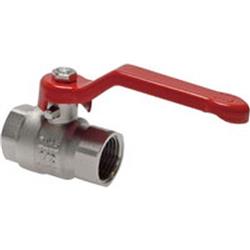
A ball valve is used to open or shut off a pipeline quickly and reliably. Turning the handle through a quarter turn rotates a drilled ball inside the valve body. When the bore is aligned with the pipeline, the medium can flow through. Rotating the ball by 90 degrees closes the passage.

This simple design makes ball valves compact, easy to operate and suitable for demanding applications. They are widely used in hydraulics, pneumatics, machinery, agriculture, transport, shipbuilding and general industry. Leeuwtechniek supplies ball valves for a wide range of pressures, connections, materials and applications.

Quick shut-off

A ball valve moves from fully open to fully closed with a quarter turn. Its position is easy to identify, allowing a pipeline to be isolated quickly.

Low pressure drop

Full-bore versions offer little resistance to flow. This helps minimise pressure loss and supports efficient system operation.

Where are ball valves used?

Ball valves are suitable for systems in which a medium must either flow freely or be completely shut off. Depending on their design, they can be used with hydraulic oil, water, compressed air, lubricants and other liquids or gases.

  • Hydraulic systems
  • Mobile hydraulics
  • Machinery and equipment
  • Agricultural machinery
  • Earthmoving equipment
  • Compressed-air systems
  • Industrial process systems
  • Workshop installations
  • Transport and vehicle manufacturing
  • Shipbuilding and offshore applications

Suitability for a specific application is always determined by the maximum working pressure, temperature, medium, sealing material and connection type.

Types of ball valves and shut-off valves

Low-pressure ball valves

Suitable for general industrial applications, water, compressed air and systems operating at lower pressures.

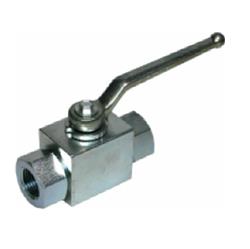
High-pressure ball valves

Designed for hydraulic systems subject to high system pressures and heavy mechanical loads.

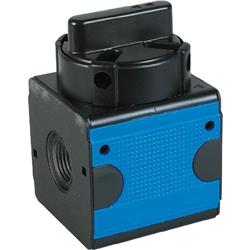
Pneumatic ball valves

Suitable for compressed-air systems and installations in which the valve is pneumatically actuated.

Two-way ball valves

Used to open or close a single pipeline. This is the most common design for standard shut-off functions.

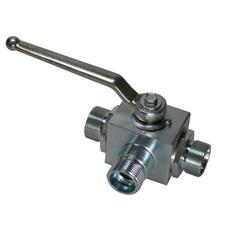
Three-way ball valves

Used to divert or distribute a medium between multiple pipelines, depending on the internal bore configuration.

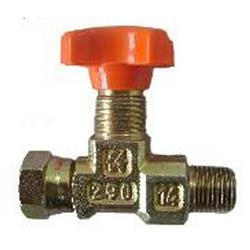
Pressure-gauge isolation valves

Allow a pressure gauge to be isolated from the system in a controlled manner for protection, replacement or maintenance.

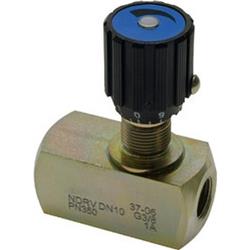
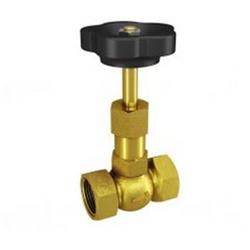
Needle valves

Suitable where flow must be regulated more precisely than is possible with a standard ball valve.

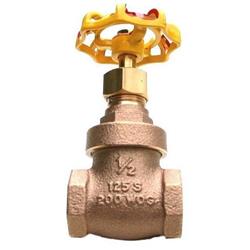
Gate valves

An alternative shut-off valve for specific pipeline and process applications.

Special versions

Different actuation methods, connection combinations and compact designs are available to suit the application.

Ball-valve body materials

The body material affects strength, corrosion resistance, weight and compatibility with the process medium.

Steel

Steel is widely used for hydraulic ball valves because of its high mechanical strength and suitability for demanding applications.

Stainless steel

Stainless steel is suitable for damp, corrosive or chemically demanding environments. Always verify the compatibility of the complete valve with the medium.

Brass

Brass is commonly used with water, compressed air and general low-pressure systems.

Connections and thread types

The connection must match the pipe, hose, adaptor or component to which the ball valve is fitted. Threads that look similar are not necessarily interchangeable.

  • BSP female threads
  • BSP male threads
  • BSPT connections
  • NPT connections
  • Metric connections
  • SAE connections
  • Cutting-ring connections
  • Product-specific flange connections

In addition to the thread type, check the size, pitch, sealing method and installation direction. Some connections seal on the thread, while others use a flat face seal, cone or sealing ring.

Full bore or reduced bore

In a full-bore ball valve, the opening through the ball is approximately equal to the internal diameter of the connected pipeline. This keeps flow resistance low. A reduced-bore valve has a smaller opening. This can enable a more compact design, but generally causes a greater pressure drop.

Comparison of full-bore and reduced-bore ball valves
Design Characteristic Suitable for
Full bore Large unobstructed opening and low pressure drop Systems where unrestricted flow is important
Reduced bore Smaller opening and more compact design Applications where installation space or component size is a priority

Seals and media compatibility

Not only the valve body, but also the seats and seals must be suitable for the medium and operating temperature. Common sealing materials differ in their resistance to oil, water, air, temperature and chemicals.

Always use the technical product information to verify whether the ball valve is suitable for the relevant medium. A material that is compatible with hydraulic oil is not necessarily suitable for aggressive chemicals, steam or high temperatures.

Installing a ball valve

Clean pipelines and connections before installation to prevent dirt, swarf and sealing-material residue from entering the valve. Apply tools only to the designated wrench flats and avoid transferring installation forces through the valve body.

Use only a sealing method that is suitable for the thread type and application. Excess sealing material can enter the pipeline or damage the connection. Always test the assembled system for leaks before it is put fully into operation.

Maintenance and inspection

Ball valves generally require little maintenance, but periodic inspection remains important. Where the system can be operated safely, cycle a valve periodically if it normally remains in the same position for long periods. This can help prevent contamination or deposits from causing the mechanism to seize.

  • Check connections for leaks
  • Look for corrosion or mechanical damage
  • Check that the handle moves freely
  • Inspect the valve after pressure surges or system faults
  • Replace damaged parts promptly
  • Follow the manufacturer's maintenance instructions

Frequently asked questions about ball valves

What is the difference between a two-way and a three-way ball valve?

A two-way ball valve opens or closes a single pipeline. A three-way ball valve can divert or distribute flow between multiple connections, depending on its internal bore configuration.

Can a ball valve be used to regulate flow?

A standard ball valve is primarily designed to be fully open or fully closed. Needle valves or dedicated flow-control valves are generally more suitable for precise or continuous regulation.

When do I need a high-pressure ball valve?

Use a high-pressure version when the maximum system pressure exceeds the permitted range of a low-pressure valve. Also account for pressure surges, temperature and the required safety margin.

Which connection should I choose?

Select the same thread type, size and sealing method as the connected pipeline or adaptor. Measure or verify the existing connection carefully.

Is stainless steel always the best choice?

Not necessarily. Stainless steel offers high corrosion resistance, but the complete valve must still be suitable for the medium, pressure and temperature.

How can I tell whether a ball valve is open or closed?

On many manually operated valves, the handle is parallel to the pipeline when the valve is open. When the handle is perpendicular to the pipeline, the valve is generally closed.

Ordering ball valves from Leeuwtechniek

Leeuwtechniek supplies ball valves and related hydraulic components for a wide range of industrial and mobile applications. Combine the valve with suitable adaptors, cutting-ring fittings, hydraulic tubes, hoses, quick-release couplings and measuring components.

Always consult the product specifications before making a final selection. If you are unsure about working pressure, connection type, material or sealing, Leeuwtechniek can help you select a suitable version for your system.