


We only use functional cookies for the operation of the webshop. For optimal functioning, please click on accept.
Tube clamps and hose clips
Secure tube and pipe support for hydraulic systems
Correctly selected and positioned clamps support hydraulic tubes, pipes and hoses, help control movement and vibration, and reduce mechanical loads on fittings and connected components.
Tube and pipe clamps are used to secure fluid lines to machine frames, walls, mounting plates and other structures. The clamp body supports the line, while the mounting hardware transfers mechanical loads to a suitable base. Correct support helps prevent uncontrolled movement, abrasion, noise and fatigue loading at connections.
Leeuwtechniek supplies DIN 3015 clamps and mounting components for different outside diameters and installation conditions. The range includes Standard, Heavy and Twin Series clamps, clamp bodies, cover plates, weld plates, rail nuts, bolts and mounting rails.
Reliable support
Correctly positioned clamps limit movement and reduce loads on fittings, bends, branches and connection points.
Organised installation
Suitable clamps help create compact, clearly routed line runs that remain accessible for inspection and maintenance.
Typical applications
- Hydraulic machinery
- Mobile hydraulic equipment
- Machine building
- Agricultural machinery
- Construction equipment
- Industrial installations
- Marine applications
- Commercial vehicles and transport equipment
- Process installations
- Workshop systems
DIN 3015 clamps are widely used for hydraulic tubing, lubrication lines, pneumatic lines and other technical pipework. The selected series, clamp body and mounting method must suit the line diameter, static and dynamic loads, temperature and installation environment.
DIN 3015 clamp series
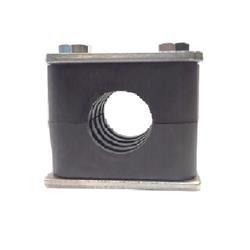
Standard Series — DIN 3015-1
A compact solution for general hydraulic and industrial line support under normal mechanical loading.
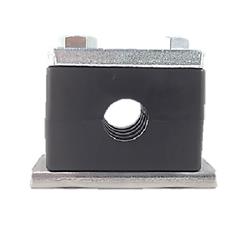
Heavy Series — DIN 3015-2
A more robust design for larger diameters, higher mechanical loads and installations exposed to strong vibration or pressure pulsation.
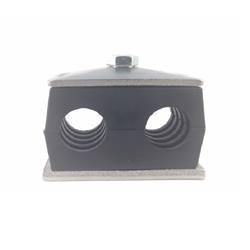
Twin Series — DIN 3015-3
Supports two parallel lines in one compact clamp body for neat, symmetrical routing.
Rail-mounted clamps
Installed on mounting rails so their position can be adjusted during assembly.
Weld-plate mounting
Uses a weld plate to create a fixed mounting point on a steel frame, plate or structure.
Stacked assemblies
Allow several lines to be supported vertically where installation space is limited, using suitable stacking hardware.
Components and mounting options
Clamp bodies
Enclose and support the line. The bore must match the exact outside diameter to provide the intended grip without excessive compression.
Cover plates
Secure the clamp body and distribute the fastening load across the assembly.
Weld plates
Provide a fixed mounting base on steel frames and machine structures.
Mounting rails
Provide flexible positioning for one or more clamps along a supported rail.
Rail nuts
Slide into the mounting rail and provide the threaded fixing point for the clamp hardware.
Bolts and stacking hardware
Used for standard, rail and stacked mounting. Always use the specified grade, dimensions and tightening torque.
Clamp and hardware materials
Polymer clamp bodies
Materials such as polypropylene or polyamide are widely used for low weight, tube-surface protection and vibration control. Availability depends on the selected product.
Rubber or elastomer
Suitable where additional damping, noise reduction or protection against contact loading is required.
Metal components
Used where mechanical strength, temperature resistance or a specific installation environment requires a metal solution.
Cover plates, weld plates, rails and bolts are commonly available in carbon steel or stainless steel. Select compatible materials and surface finishes for the expected moisture, corrosion, temperature and mechanical loading.
Standard, Heavy and Twin Series compared
| Series | Main characteristic | Typical use |
|---|---|---|
| Standard Series | Compact design for general line support | Small and medium-sized hydraulic tubes and industrial lines |
| Heavy Series | More robust construction for higher mechanical loads | Larger lines and demanding hydraulic installations |
| Twin Series | Supports two parallel lines in one clamp body | Compact and symmetrical parallel line runs |
Important: system pressure alone does not determine the correct clamp series. Consider tube outside diameter, line mass, pressure pulsation, vibration, acceleration, mounting orientation and other mechanical loads.
How to select the correct clamp
- Measure the exact outside diameter of the tube, pipe or hose.
- Select the appropriate Standard, Heavy or Twin Series.
- Assess static and dynamic mechanical loads.
- Allow for pressure pulsation, vibration and machine movement.
- Select suitable clamp-body and fastening materials.
- Choose weld-plate, rail or threaded-plate mounting as required.
- Check temperature, moisture, chemicals and corrosion exposure.
- Determine suitable mounting height, orientation and clamp spacing.
- Follow the product-specific installation and tightening instructions.
Clamp spacing and positioning
The required spacing depends on the line outside diameter, wall thickness, material, mass, routing, system dynamics and vibration level. Additional support may be required close to bends, branches, fittings, valves and other heavy components.
Do not allow the full weight of a line or vibration-induced loads to be carried by a fitting. Clamp the line to a sufficiently rigid structure and follow the specified spacing for the application. Leeuwtechniek's clamp installation guide (Dutch PDF) provides additional mounting information.
Mounting on weld plates and rails
Weld plates provide a fixed and robust mounting base. Complete the welding work before installing heat-sensitive clamp bodies, remove weld spatter and contamination, restore the required corrosion protection and allow the assembly to cool before final installation.
Mounting rails allow clamps to be repositioned and are suitable for several parallel lines. The rail and its supporting structure must be strong enough for the expected loads. Position the rail nuts correctly and tighten all fasteners in accordance with the product instructions.
Common installation errors
- Using a clamp body that does not match the line diameter
- Compressing or deforming the tube, pipe or hose
- Installing too few clamps or using unsuitable spacing
- Positioning clamps too far from bends and heavy components
- Using an unsuitable series for the mechanical loading
- Forcing misaligned lines into position and creating preload
- Combining materials that are unsuitable for the environment
- Using incorrect fasteners or tightening bolts incorrectly
- Mounting clamps on a weak, uneven or insufficiently supported base
Benefits of correct line support
- Better control of vibration and noise
- Reduced mechanical loading on fittings
- Neat and clearly organised line routing
- Lower risk of uncontrolled abrasion
- Improved access for inspection and maintenance
- Reduced fatigue loading on supported lines
- Compact use of installation space
- Consistent and professional assembly
Inspection and maintenance
Depressurise the system safely before loosening clamps or working on supported fluid lines. During routine inspection, check fasteners for loosening, clamp bodies for cracks or deformation, metal parts for corrosion and lines for displacement, abrasion or contact with adjacent components.
Inspect supports more frequently in installations exposed to strong vibration, pressure pulsation, shock loading or changing temperatures. Replace damaged parts with the correct specified components and investigate the underlying cause before returning the system to service.
Frequently asked questions about tube and pipe clamps
How do I determine the correct clamp size?
Measure the exact outside diameter of the tube, pipe or hose and select a clamp body made for that diameter. The intended preload and holding force depend on the correct fit.
When should I use a Heavy Series clamp?
Heavy Series clamps are intended for larger diameters or higher mechanical and dynamic loads. Strong vibration and pressure pulsation may also require a more robust series, but the selection must follow the product and system requirements.
What is the benefit of a Twin Series clamp?
It supports two parallel lines in a compact arrangement and can reduce the number of separate mounting components required.
Can DIN 3015 clamps be mounted on a rail?
Yes. Compatible mounting rails and rail nuts allow clamps to be positioned along the rail. The rail itself must be correctly supported and fastened.
How far apart should the clamps be?
There is no single spacing for every installation. It depends on line size, material, mass, routing, system dynamics and vibration. Follow the applicable product and engineering instructions and provide additional support near bends and heavy components where required.
Can a hose clip replace a DIN 3015 clamp on rigid tubing?
No. A hose clip is designed to secure a hose to a fitting and does not provide the same controlled support or mounting function as a correctly selected tube or pipe clamp.
Why does a line still vibrate after clamps have been installed?
Possible causes include excessive clamp spacing, an incorrect clamp size or series, a flexible mounting base, pressure pulsation, mechanical excitation or resonance. Identify the source of the vibration rather than simply adding clamps without reviewing the system.
Order tube and pipe clamps from Leeuwtechniek
Leeuwtechniek supplies Standard, Heavy and Twin Series DIN 3015 clamps, together with clamp bodies, cover plates, weld plates, mounting rails, rail nuts, bolts and stacking components.
Always consult the technical product data. If you are unsure about the line diameter, clamp series, material, mounting method or mechanical loading, Leeuwtechniek can help you select a suitable configuration.
Need help selecting the correct clamp?
Our specialists can help you compare clamp sizes, DIN 3015 series, materials, mounting methods and spacing for your installation.
Call +31 38 421 80 23
Secure support for tubes, pipes and hoses.
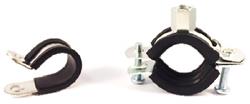
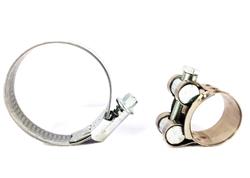
Explore DIN 3015 tube clamps, U-bolt clamps, hose clips and elastomer-lined steel clamps for secure installation and effective control of vibration, movement and wear.