


We only use functional cookies for the operation of the webshop. For optimal functioning, please click on accept.
Hose & Tube Machines
Professional equipment for hose assembly and tube fabrication
Reliable hydraulic assemblies start with accurate preparation and controlled assembly. Explore machines and workshop equipment for cutting, skiving, crimping and cleaning hydraulic hoses, as well as bending, deburring, cleaning and preparing hydraulic tubes.
Leeuwtechniek supplies equipment for workshops, production facilities and mobile service operations. The right solution depends on the hose or tube range, production volume, required repeatability, available workspace and the specifications of the fitting system being used.
Always treat the hose, coupling, ferrule, tube, fitting, tooling and machine settings as one matched system. Product-specific assembly instructions take precedence over general workshop practice.
Machines and equipment in the range
Hose cutting machines
For making clean, square cuts in hydraulic hose while limiting deformation and damage to the reinforcement.
Hose skiving machines
For controlled internal or external skiving when this is specified for the selected hose and coupling system.
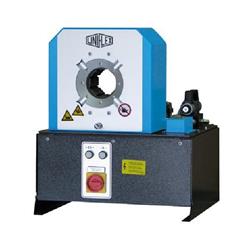
Hose crimpers
Workshop and production machines for crimping compatible couplings onto hydraulic hose with the prescribed dies and settings.
Hose cleaning equipment
For removing contamination introduced during cutting and assembly before the hose ends are protected for storage or installation.
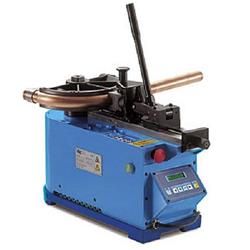
Tube bending equipment
Manual and powered solutions for producing controlled bends in hydraulic tube without excessive flattening, wrinkling or kinking.
Cutting-ring assembly equipment
Machines and system-specific tooling for repeatable pre-assembly of cutting rings on hydraulic tube.
Tube preparation equipment
Equipment for cutting, deburring and cleaning tube ends before bending or fitting assembly.
Hose storage systems
Racks and workshop storage solutions that help organise bulk hose and support efficient material handling.
Tooling and assembly aids
Dies, blades, mandrels, hardened pre-assembly tools and approved lubricants selected for the relevant machine and fitting system.
Typical applications
- Hydraulic hose workshops
- Machine and equipment manufacturing
- Mobile hydraulic service
- Agricultural and construction machinery
- Commercial vehicle maintenance
- Industrial maintenance departments
- Series production of hose assemblies
- Fabrication of rigid hydraulic pipework
Which machine suits your process?
| Equipment | Main purpose | Important selection criteria |
|---|---|---|
| Hose cutting machine | Cutting hydraulic hose cleanly and squarely | Maximum hose outside diameter, hose construction, blade type, duty cycle, extraction and operator protection |
| Hose skiving machine | Removing a specified amount of cover or inner tube | Internal or external skiving, hose sizes, tooling, adjustment range and compatibility with the assembly system |
| Hose crimper | Crimping compatible couplings onto hose | Crimp force, opening, hose and coupling range, dies, control system, production volume and current crimp data |
| Hose cleaning equipment | Removing particles and process contamination | Hose size and length, required cleanliness, cleaning method, fluid compatibility and end protection |
| Tube bending equipment | Forming repeatable bends in hydraulic tube | Tube outside diameter, wall thickness, material, minimum bend radius, tooling and production volume |
| Cutting-ring pre-assembly machine | Controlled pre-assembly of cutting rings | Fitting system, tube material and dimensions, light or heavy series, tooling, inspection method and throughput |
Cutting hydraulic hose
A clean, square cut helps the hose enter the coupling correctly and supports a consistent assembly. A suitable cutting machine limits ovalisation, fraying and unnecessary heat input, particularly with wire-reinforced hose.
Select the blade and operating method for the hose construction and machine. Keep the blade sharp, support the hose and use the guards and extraction system specified by the machine manufacturer. After cutting, inspect the cut face and remove generated contamination before assembly.
Skiving hydraulic hose
Some hose and coupling systems require external skiving, internal skiving or both. Skiving removes a controlled layer of hose material so the coupling components can engage as designed. Many modern systems use no-skive couplings, so skiving should never be assumed.
Follow the exact skive length and depth in the current assembly instructions. Incorrect skiving can damage the reinforcement or inner tube and may compromise the finished hose assembly.
Important: only skive a hose when the approved hose and coupling combination specifically requires it. Use compatible tooling and inspect the prepared hose before fitting the coupling.
Crimping hose assemblies
A hose crimper applies radial force through a die set to attach the coupling to the hose. A reliable result depends on the validated combination of hose, coupling, ferrule, machine, die set and crimp setting.
Use current manufacturer crimp data for the exact combination. After crimping, measure the finished crimp diameter at the specified position and according to the prescribed method. Also check insertion depth, alignment and visible damage. Calibration, tooling condition and machine maintenance directly affect process consistency.
Workshop crimpers
Flexible machines for service work and varied, small-batch hose assembly where frequent tooling changes may be required.
Production crimpers
Machines designed for higher throughput, repeatability and integration into a structured production process.
Cleaning hose assemblies
Cutting, skiving and assembly can introduce rubber particles, metal particles, dust and other contaminants. If these remain in the hose, they can enter the hydraulic system and contribute to premature component wear or malfunction.
Select a cleaning method that is suitable for the hose, coupling and required cleanliness level. Clean at an appropriate stage in the assembly process, verify the result when the application requires it and cap or plug both ends promptly to prevent recontamination.
Bending hydraulic tube
Correct bending produces the required geometry while limiting flattening, wrinkling, wall thinning and surface damage. The tube material, outside diameter, wall thickness and minimum bend radius determine the required machine and tooling.
Allow for springback and leave sufficient straight tube at each end for the selected fitting and assembly method. Manual benders suit service work and lower volumes; powered machines offer greater consistency and productivity for repeated bends.
Cutting, deburring and cleaning hydraulic tube
Tube preparation has a direct influence on fitting assembly. Cut the tube squarely with a method approved by the fitting manufacturer, then deburr the inside and outside without creating an excessive chamfer. Remove chips, cutting residue and other contamination before assembly.
Protect prepared tubes with suitable caps or plugs until installation. For critical applications, define and verify the required cleanliness instead of relying on appearance alone.
Cutting-ring pre-assembly
Cutting-ring fittings depend on controlled ring engagement with the tube. A pre-assembly machine can improve repeatability and reduce operator effort, especially in production work, but it must be set up for the exact fitting system, tube dimensions, material and series.
Use the system manufacturer's instructions and approved tooling. Hardened pre-assembly adaptors or cones are wear parts and must be inspected regularly. After pre-assembly, check the cutting-ring position and material bite using the specified inspection method before final installation.
Checklist for selecting workshop equipment
- Define the hose and tube types, materials and size range.
- Determine daily output, peak demand and required repeatability.
- Check compatibility with the hose, coupling and tube-fitting systems used.
- Select the correct blades, dies, mandrels and pre-assembly tooling.
- Allow for machine opening, workpiece length and material support.
- Plan extraction, cleaning, lighting and electrical or hydraulic supply.
- Consider changeover time, ergonomics and operator training.
- Confirm maintenance, calibration and spare-parts requirements.
- Keep current assembly data and inspection instructions at the workstation.
- Define how assemblies, materials and process settings will be identified and recorded.
Planning an efficient workshop
A logical material flow reduces handling and helps prevent contamination. Where practical, arrange storage, measurement, cutting, preparation, cleaning, assembly, inspection and end protection as consecutive process steps.
Material control
Identify hose, tube, couplings and fittings clearly and store them so that specification and batch information remain traceable.
Clean working zones
Separate particle-generating operations from cleaned components and protect open hose and tube ends immediately.
Process control
Keep current settings, inspection criteria and measuring equipment available where the work is performed.
Safe machine operation
- Only trained personnel should operate the equipment.
- Follow the machine manual, assembly instructions and workplace risk assessment.
- Keep guards, interlocks and emergency stops operational and accessible.
- Isolate all energy sources before maintenance, cleaning or tooling changes where required.
- Use suitable eye, hearing and other personal protection for the task.
- Control cutting fumes, dust and particles with the specified extraction equipment.
- Keep hands, loose clothing and jewellery away from blades, dies and moving parts.
- Support long or heavy hoses and tubes to prevent uncontrolled movement.
- Never exceed the machine, tooling or component limits.
Maintenance and process reliability
Inspect blades, crimp dies, bending tools and pre-assembly tools for wear, damage and contamination. Check hydraulic systems, electrical controls, guards, interlocks and emergency stops at the intervals specified by the manufacturer.
Keep measuring equipment suitable and calibrated for the required accuracy. Record maintenance, calibration and corrective actions where process traceability is important. Remove damaged tooling or machines with uncertain performance from service until they have been assessed.
Frequently asked questions about hose and tube machines
Which machines do I need to make hydraulic hose assemblies?
A basic workshop generally needs suitable equipment for measuring, cutting, cleaning and crimping. A skiving machine is only required for hose and coupling systems that specify internal or external skiving. The exact equipment depends on the product range, production volume and inspection requirements.
Does every hydraulic hose need to be skived?
No. Many hose and coupling combinations are designed for no-skive assembly. Only skive when the current instructions for the exact combination require it, and use the specified length, depth and tooling.
Can I use crimp data from another hose or coupling?
No. Crimp settings and diameters apply to a specific validated combination of hose, coupling, ferrule, machine and dies. Always use current data from the relevant system manufacturer.
Why should a hose assembly be cleaned?
Cutting and assembly can leave rubber, metal and dust inside the hose. Suitable cleaning and prompt end protection reduce the risk of this contamination entering the hydraulic system.
Which equipment is used to fabricate hydraulic tube?
Depending on the work, this may include tube cutting and deburring equipment, manual or powered bending machines, cleaning equipment and system-specific cutting-ring pre-assembly tools or machines.
What is the advantage of a cutting-ring pre-assembly machine?
It can improve repeatability and reduce manual effort when correctly set up for the fitting system and tube. The assembly must still be inspected according to the fitting manufacturer's instructions.
Can Leeuwtechniek help me select a machine?
Yes. Share the hose or tube range, fitting system, expected production volume, available workspace and required operations. Our specialists can then help compare suitable equipment and tooling.
Order hose and tube fabrication equipment from Leeuwtechniek
Leeuwtechniek supplies machines, tooling and workshop equipment for professional hydraulic hose assembly and tube fabrication. The range includes solutions for cutting, skiving, crimping, cleaning, bending, deburring and cutting-ring pre-assembly.
Always consult the product-specific technical data and assembly instructions. If you are unsure about machine capacity, tooling, compatibility or workshop layout, our specialists can help you assess the application.
Need help selecting the right equipment?
Tell us which hoses, tubes and fitting systems you work with and how many assemblies you produce. We will help you compare suitable machines and tooling.
Call +31 38 421 80 23
Professional machines for hose assembly and tube fabrication.
Explore equipment for cutting, crimping, skiving and cleaning hydraulic hoses, together with machines for bending and preparing hydraulic tubing. Suitable for workshops, production facilities and technical service operations.