


We only use functional cookies for the operation of the webshop. For optimal functioning, please click on accept.
Pneumatics
Pneumatic components for compressed air systems
Cylinders, valves, air preparation, hoses and fittings for reliable motion, control and automation using compressed air.
Professional pneumatics for machines and automation
Pneumatics uses compressed air to create movement, operate components and automate industrial processes. Pneumatic systems are widely used because they can operate quickly, are relatively simple to configure and are well suited to repetitive movements and automated machine functions.
Leeuwtechniek supplies a comprehensive range of pneumatic components for building, maintaining and modifying compressed air systems. The range includes pneumatic cylinders, valves, air preparation units, pneumatic hoses, push-in fittings, brass compression fittings, threaded brass fittings, check valves, quick connectors and blow guns.
The correct combination of components depends on factors such as operating pressure, required force, air consumption, flow rate, hose diameter, connection type and environmental conditions.
Fast and reliable motion
Pneumatic cylinders convert compressed air into linear movement for clamping, pushing, lifting, positioning and many other machine functions.
Flexible system design
Valves, hoses and compact fittings make pneumatic systems easy to configure, connect and adapt to different machine and automation requirements.
Pneumatic components at Leeuwtechniek
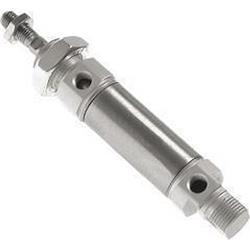
Round pneumatic cylinders
Compact round cylinders for linear movement in machines, fixtures and automation systems where efficient use of installation space is important.
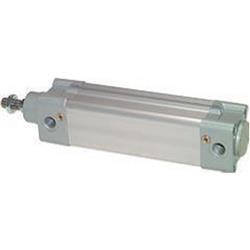
ISO 15552 pneumatic cylinders
Industrial pneumatic cylinders with standardised dimensions for applications requiring greater force, longer strokes and robust construction.
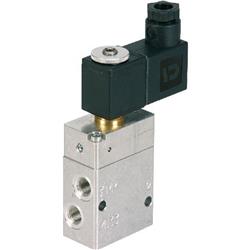
Pneumatic valves
Directional valves and control components for starting, stopping and changing the direction of compressed air to cylinders and other actuators.
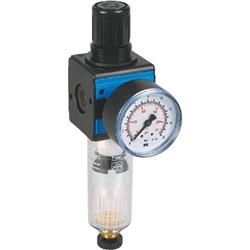
Air preparation units
Filters, pressure regulators and combinations for conditioning compressed air and maintaining a suitable operating pressure.
Pneumatic hose
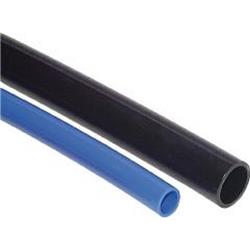
Flexible hoses in different materials and sizes for transporting compressed air between valves, cylinders, fittings and other components.
Push-in fittings
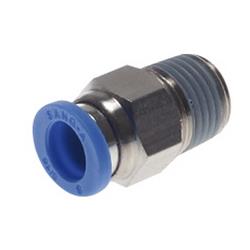
Compact fittings for quick connection of compatible pneumatic tubing without complicated assembly procedures.
Brass compression fittings
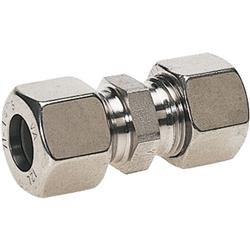
Mechanical, detachable connections for pneumatic tubing where a robust connection using a nut and compression ring is required.
Brass fittings
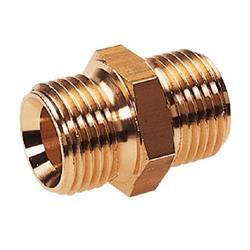
Threaded nipples, elbows, tees, reducers and other brass connections for building and adapting compressed air circuits.
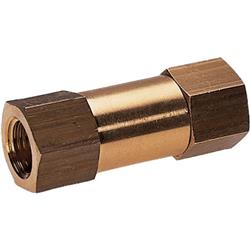
Check valves
Allow compressed air to flow in one direction while helping prevent unwanted reverse flow within the pneumatic circuit.
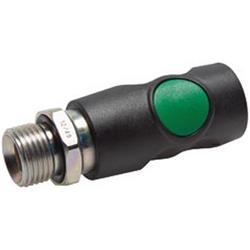
Pneumatic quick connectors
Quick-release connections for compressed air lines and pneumatic equipment that need to be connected and disconnected regularly.
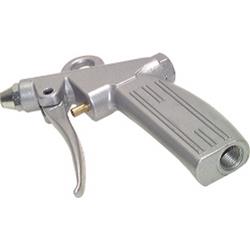
Pneumatic blow guns
Hand-operated compressed air tools for controlled blowing, cleaning and drying applications in workshops and industrial environments.
Where are pneumatic systems used?
Pneumatics is particularly suitable for applications requiring fast and repeatable movements. Pneumatic components are therefore found throughout machine building, production and industrial automation.
- Machine building
- Industrial automation
- Packaging machinery
- Assembly and production lines
- Transport and sorting systems
- Workshops
- Material handling
- Agricultural equipment
- Pick-and-place systems
- Clamping and positioning
The performance of a pneumatic system depends on more than the available air pressure. Air consumption, flow capacity, hose diameter, valve sizing and actuator dimensions all influence speed, force and efficiency.
How does a pneumatic system work?
A typical pneumatic system consists of several components that prepare, control and use compressed air. Correct sizing of each part helps ensure reliable operation.
1. Prepare the air
An air preparation unit filters the compressed air and regulates the pressure before it enters the machine or pneumatic circuit.
2. Control the airflow
Pneumatic valves determine when compressed air flows and which side of an actuator is pressurised or exhausted.
3. Create movement
A pneumatic cylinder converts air pressure into force and linear movement. Hoses and fittings connect the individual components.
Which pneumatic component do you need?
| Component | Main function | Important selection criteria |
|---|---|---|
| Pneumatic cylinder | Convert compressed air into linear force and movement | Bore, stroke, force, pressure, mounting, cushioning and speed |
| Pneumatic valve | Start, stop or reverse airflow | Valve configuration, port size, flow rate, actuation and voltage |
| Air preparation unit | Filter compressed air and regulate pressure | Connection size, flow rate, filtration and pressure range |
| Pneumatic hose | Transport compressed air flexibly | Inside and outside diameter, material, pressure, temperature and bend radius |
| Push-in fitting | Connect pneumatic tubing quickly | Tube diameter, thread size, configuration, pressure and material |
| Check valve | Prevent reverse airflow | Connection, flow capacity, opening pressure and flow direction |
How do you select the right pneumatic components?
A reliable pneumatic system starts with correct sizing. Consider the complete application rather than selecting each component separately.
- Determine the available supply pressure and required working pressure
- Calculate the required force and cylinder stroke
- Determine the required movement speed
- Check the required airflow and air consumption
- Select the correct cylinder bore and mounting method
- Choose the appropriate valve configuration and actuation
- Match hose diameter and fitting size to the required flow
- Select suitable air preparation and filtration
- Check temperature and environmental conditions
- Allow sufficient access for inspection and maintenance
Selecting a pneumatic cylinder
A pneumatic cylinder converts compressed air into linear force. The cylinder bore and available pressure largely determine the theoretical force that can be generated. In practice, friction, pressure losses, movement speed and a suitable safety margin must also be taken into account.
The stroke determines how far the piston rod moves. Also consider the available installation space, mounting method and the position of the air connections. Loads should preferably act in line with the piston rod, as excessive side loads can cause additional wear.
For industrial applications, standardised cylinders such as ISO 15552 designs can simplify machine design and replacement because important mounting dimensions are standardised.
Pneumatic valves and directional control
Pneumatic valves control the supply and exhaust of compressed air. They determine when an actuator moves, in which direction it moves and when the movement stops.
The required valve depends on the pneumatic circuit and actuator. Important factors include the number of ports and positions, flow capacity, port size, actuation method and required rest position.
- Manual actuation
- Mechanical actuation
- Pneumatic actuation
- Solenoid actuation
- Spring return
- Bistable operation
For electrically operated valves, always verify the required voltage and electrical connection before installation.
Air preparation and compressed air quality
Contamination, moisture and incorrect pressure can negatively affect the operation and service life of pneumatic components. An air preparation unit is therefore commonly installed at the beginning of a machine or pneumatic circuit.
Filters help remove contamination and condensate, while pressure regulators maintain the required downstream pressure. Depending on the application, several air preparation functions can be combined into one unit.
Select air preparation equipment according to the required flow capacity, connection size, pressure range and required air quality. Lubrication should only be added when it is required for the components and application.
Pneumatic hoses and push-in fittings
Pneumatic tubing forms the flexible connection between valves, cylinders and other components. Leeuwtechniek supplies pneumatic hoses in different materials, including PU, PA and PVC. Each material has different characteristics relating to flexibility, mechanical resistance, pressure and temperature.
PU tubing is widely used in machine building because of its flexibility. PA tubing is generally more dimensionally stable and can be suitable where greater mechanical resistance is required. PVC hose is used for various general compressed air applications. Always check the specifications of the exact hose before use.
Push-in fittings provide a fast way to connect compatible pneumatic tubing. Cut the tube squarely and make sure the end is clean and undamaged before inserting it fully into the fitting. The tube diameter and material must match the specifications of the fitting.
Reducing pressure loss and air consumption
Compressed air is convenient and versatile, but unnecessary pressure losses and leakage increase energy consumption. Correct component sizing can therefore improve both system performance and efficiency.
A hose that is too small or a valve with insufficient flow capacity creates additional resistance. This can reduce cylinder speed and cause pressure at the actuator to fall below the pressure available at the supply.
- Use sufficient hose diameter
- Select valves with adequate flow capacity
- Avoid unnecessary restrictions
- Keep hose runs practical and efficient
- Use only the pressure required by the application
- Repair compressed air leaks
Common mistakes in pneumatic systems
- Selecting a cylinder without calculating the required force
- Using hoses or fittings that are too small for the required airflow
- Operating the entire system at unnecessarily high pressure
- Ignoring pressure losses between the air supply and actuator
- Using the wrong valve configuration or electrical voltage
- Installing tubing with sharp bends or kinks
- Ignoring condensate and contamination in the compressed air
- Using incompatible tubing and push-in fittings
- Ignoring leakage because the system still appears to operate
Safe use of compressed air
Compressed air stores energy and pneumatic actuators can move unexpectedly when pressure is applied or released. Always depressurise the relevant part of the system before disconnecting hoses, valves, cylinders or fittings.
Prevent uncontrolled movement of cylinders during maintenance and make sure loads cannot move when pressure is removed. Components must be suitable for the operating pressure and temperature of the installation.
Compressed air should also be used carefully for blowing and cleaning. Never direct a blow gun at people and always follow the applicable safety requirements for the workplace, machine and application.
Inspection and maintenance
Pneumatic systems are generally reliable and require relatively little maintenance, but regular inspection helps prevent air leakage, unexpected downtime and unnecessary energy consumption.
- Check the system for air leaks
- Drain condensate when required
- Replace filter elements when necessary
- Inspect hoses and fittings for damage
- Check cylinders for leakage and excessive play
- Test valves for correct switching
- Check tubing for kinks and abrasion
- Inspect the system after modifications or faults
A correctly maintained compressed air system operates more reliably and efficiently. When a component repeatedly fails, investigate the underlying cause instead of only replacing the damaged part.
Frequently asked questions about pneumatics
What is pneumatics?
Pneumatics uses compressed air to create movement and to control or automate machines and industrial processes.
How do I select a pneumatic cylinder?
Determine the required force, bore, stroke, working pressure, speed, mounting method and available installation space. Allow for friction, pressure loss and a suitable safety margin.
What does an air preparation unit do?
An air preparation unit conditions the compressed air before it enters the pneumatic circuit. Depending on the configuration, it can filter the air, separate condensate and regulate the downstream pressure.
What is the advantage of push-in fittings?
Push-in fittings allow compatible pneumatic tubing to be connected quickly and compactly. The tube is simply inserted into the fitting and can usually be released again without dismantling the connection.
Which pneumatic hose material should I choose?
This depends on pressure, temperature, required flexibility, environment and mechanical loads. PU, PA and PVC each have different characteristics, so always check the product specifications for the application.
Why is my pneumatic cylinder moving too slowly?
Possible causes include insufficient airflow, undersized hoses or valves, excessive restrictions, low supply pressure or incorrect flow control. The complete air path should be checked.
How can I reduce compressed air consumption?
Use only the pressure required by the application, repair leaks, size hoses and valves correctly and avoid unnecessary restrictions in the compressed air circuit.
Can Leeuwtechniek help select pneumatic components?
Yes. Information about the required movement, force, stroke, working pressure, flow, connection and operating environment helps determine suitable pneumatic components.
Order pneumatic components from Leeuwtechniek
Leeuwtechniek supplies pneumatic components for machine building, industrial automation, workshops, transport systems and many other compressed air applications. The range includes pneumatic cylinders, valves, air preparation equipment, hoses, fittings, check valves, quick connectors and blow guns.
For reliable operation, select components according to the requirements of the complete pneumatic system. Consider pressure, flow, air consumption, movement, connections and environmental conditions rather than looking at one specification alone.
If you are unsure which cylinder, valve, hose, fitting or air preparation unit is suitable for your application, Leeuwtechniek can assist with product selection.
The right pneumatic components for your application
Explore the Leeuwtechniek pneumatics range or contact us for technical advice on cylinders, valves, air preparation, pneumatic hoses and fittings.
Professional components for compressed air and pneumatic systems.
From pneumatic cylinders and valves to air preparation, hoses, push-in fittings and couplings. Everything you need for reliable pneumatic motion, control and automation.