


We only use functional cookies for the operation of the webshop. For optimal functioning, please click on accept.
Gates
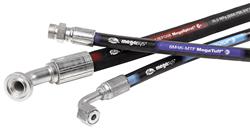
Gates hydraulic hoses and couplings
Hydraulic hose and coupling systems for professional applications where pressure, movement and demanding operating conditions require a reliable hose assembly.
Gates for professional hydraulic systems
Gates is a specialist in hydraulic hoses and couplings for mobile and industrial hydraulic systems. The Gates range includes different hose and coupling families, allowing components to be selected according to working pressure, hose size, construction, connection type and operating conditions.
Leeuwtechniek supplies Gates components for building professional hydraulic hose assemblies. The range includes Gates hydraulic hoses, MegaCrimp couplings, Global Spiral Plus, Global Spiral and Global Spiral Maximum.
A hydraulic hose assembly should always be considered as a complete system. The hose, coupling, size and crimp specification must be compatible with each other and suitable for the intended application. Always use the current technical specifications and assembly data for the exact Gates components being used.
Hose and coupling as one system
Working pressure, hose construction, coupling design and crimp dimensions all contribute to the performance of a hydraulic hose assembly. Correct component selection is therefore essential.
For demanding applications
Gates hydraulic hoses and couplings are used in mobile hydraulics, agriculture, transport, mechanical engineering, material handling and industrial equipment.
The Gates range at Leeuwtechniek
Different hydraulic applications place different demands on a hose assembly. Gates therefore offers multiple hose and coupling families for different hose constructions and operating conditions.
Gates hydraulic hoses
Hydraulic hoses in various sizes, constructions and pressure classes for mobile and industrial hydraulic applications.
Gates MegaCrimp
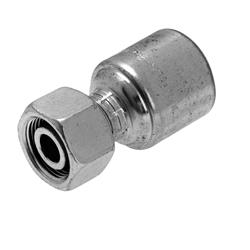
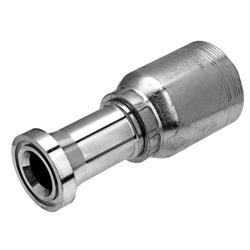
MegaCrimp is a one-piece no-skive coupling system for approved Gates hydraulic hoses. Always select the coupling according to the specified hose and size.
Global Spiral Plus
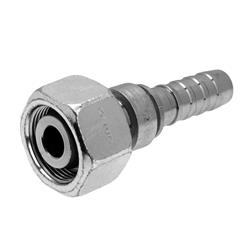
Couplings for compatible Gates hydraulic hoses used in demanding applications. The correct hose-coupling combination must always be verified using current technical data.
Global Spiral
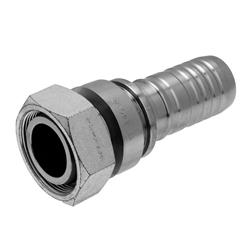
A Gates coupling system for approved high-pressure spiral-wire hoses, where hose, stem, ferrule and crimp specification are selected as a complete system.
Global Spiral Maximum
Components for heavy-duty Gates hose assemblies. Selection should be based on the exact hose, coupling, size and specified assembly data.
Technical support
Not sure which Gates hose or coupling is suitable? Leeuwtechniek can help identify a suitable combination based on your hose, connection and application data.
Where are Gates hydraulic hoses used?
Hydraulic hoses provide a flexible connection between components such as pumps, valves, cylinders and hydraulic motors. They are particularly important where machine components move in relation to each other or where rigid pipework is not practical.
Mobile hydraulics
Excavators, loaders, lifting equipment and other mobile machines require flexible hoses that can move with the hydraulic system.
Agriculture
Hydraulic hoses are widely used on tractors, implements, harvesting machinery and other agricultural equipment.
Mechanical engineering
Hydraulic machines use hoses to connect pumps, valves, cylinders and other components where flexibility is required.
Transport
Tail lifts, vehicle bodies, loading systems and transport equipment use hydraulic hoses for flexible fluid connections.
Industry
Hydraulic power units, presses and production equipment use hose assemblies where movement or flexible routing is required.
Heavy-duty equipment
Applications with high pressure, repeated pressure cycles and demanding operating conditions require careful hose and coupling selection.
How do you select the right Gates hydraulic hose?
The correct hydraulic hose is determined by the complete application. Selecting a hose only by its inside diameter or maximum pressure is not sufficient.
- Required hose size and inside diameter
- Normal and maximum working pressure
- Pressure peaks and dynamic loading
- Fluid and ambient temperature
- Hydraulic fluid or other medium
- Minimum bend radius
- Required hose flexibility
- Abrasion and external mechanical loads
- Required coupling and connection
- Hose length and routing
- Specified crimp and assembly data
Gates ProV, MXT and M+ hydraulic hoses
The Gates hydraulic hose range includes different hose families for different operating conditions. ProV, MXT and M+ are examples of Gates hose ranges that allow a hydraulic hose to be selected according to the requirements of the installation.
When comparing hydraulic hoses, look beyond the nominal hose size. Working pressure, pressure cycles, flexibility, bend radius, installation space, medium and environmental conditions all influence the final selection.
Always consult the specifications of the exact Gates hose before using it in an application. Pressure ratings, temperature ranges, dimensions and other properties can differ between hose families and sizes.
MegaCrimp and Global Spiral
The coupling is an integral part of the hydraulic hose assembly. A coupling that appears to have the correct dimensions is not automatically compatible with a particular hose.
| Gates system | General characteristic | Important when selecting |
|---|---|---|
| MegaCrimp | One-piece no-skive coupling for approved Gates hoses | Check hose family, size, coupling and crimp specification |
| Global Spiral | No-skive coupling system for approved high-pressure spiral-wire hoses | Hose, stem, ferrule and crimp data must form an approved combination |
| Global Spiral Plus | Coupling range for compatible hoses in demanding applications | Select according to the latest technical and assembly data |
| Global Spiral Maximum | Components for heavy-duty hose assemblies | Verify the exact hose, coupling, size and assembly specifications |
What does no-skive mean?
With a no-skive hose-coupling combination, the outer cover of the hydraulic hose does not need to be removed before the coupling is assembled. This can simplify hose preparation and helps maintain a controlled assembly process.
No-skive does not mean that every hose can be combined with every coupling. Compatibility applies to specific combinations of hose, coupling and size. Always follow the assembly instructions for the exact products being used.
Do not skive a hose when the approved combination is specified as no-skive, and do not leave a hose unskived when skiving is required. Changing the specified preparation can affect how the coupling interfaces with the hose construction.
Working pressure and pressure peaks
A hydraulic hose must be suitable for the maximum working pressure of the system. Hydraulic installations can also experience short pressure peaks caused by rapidly switching valves, sudden load changes or movement of hydraulic actuators.
The allowable pressure of the complete hose assembly is not determined by the hose alone. Couplings, adapters and other components also have their own pressure ratings. The component with the lowest allowable pressure can therefore limit the complete assembly.
Never select a hose based solely on a pressure value printed on an existing hose without checking the complete application and the current technical specifications.
Temperature and fluid compatibility
Both the temperature of the hydraulic fluid and the ambient temperature can affect hose performance. A hose installed close to an engine, exhaust system or other heat source may be exposed to considerably different conditions from the fluid temperature inside the hose.
The hose tube and other materials must also be compatible with the hydraulic fluid or other medium being transported. A hose suitable for conventional hydraulic oil is not automatically suitable for every synthetic fluid, chemical or other medium.
Always verify fluid compatibility and the permitted temperature range in the technical information for the exact hose.
Bend radius and hose routing
Every hydraulic hose has a specified minimum bend radius. Bending a hose more tightly than permitted can place additional stress on the reinforcement and may reduce service life.
Correct routing is therefore an important part of hose selection and installation. The hose should have sufficient length to move naturally without being stretched, twisted or sharply bent directly behind the coupling.
- Respect the minimum bend radius
- Avoid twisting the hose
- Allow sufficient movement
- Avoid tensile loads on couplings
- Protect against sharp edges
- Keep away from excessive heat
- Prevent unnecessary abrasion
- Support long hose runs where required
Standard, XtraTuff and MegaTuff hose covers
The outer cover protects the hydraulic hose against environmental and mechanical influences. In applications where hoses regularly rub against other hoses, steelwork or machine components, abrasion resistance can become an important selection criterion.
Gates offers different cover technologies, including standard covers and more abrasion-resistant options such as XtraTuff and MegaTuff. The appropriate cover depends on the environment in which the hose is installed and the level of mechanical wear it is expected to encounter.
Cover type should not be confused with the pressure rating of the hose. Working pressure, reinforcement, cover properties and other specifications must be evaluated separately when selecting a hydraulic hose.
Common mistakes when selecting and assembling hydraulic hoses
- Selecting a hose only by its inside diameter
- Looking only at the maximum pressure marked on the hose
- Ignoring pressure peaks and dynamic loads
- Using a similar-looking coupling without verifying compatibility
- Combining hose and coupling families without approval
- Using an incorrect crimp diameter
- Skiving a no-skive combination
- Ignoring the minimum bend radius
- Installing a hose under torsion or tension
- Allowing hoses to rub against sharp surfaces
Crimping Gates hoses and couplings
The correct crimp specification is essential when assembling a hydraulic hose. Crimp dimensions are linked to the exact combination of hose, coupling and size. A setting used for another hose or coupling should therefore not automatically be reused.
Verify the part numbers before assembly and use the current Gates crimp specifications for the selected components. After crimping, the assembly should be checked according to the applicable production and inspection procedure.
For repeated or serial hose production, recording part numbers, crimp data and inspection measurements helps maintain a consistent assembly process.
Inspection and service life of hydraulic hoses
Hydraulic hoses are wear components and should be inspected regularly. Inspection frequency depends on the machine, operating hours, environment and severity of the application.
- Check the outer cover for abrasion
- Look for cracks or other damage
- Inspect couplings for leakage
- Check for deformation near the ferrule
- Look for kinks or flattened sections
- Check the hose for unwanted twisting
- Inspect routing and supports
- Replace damaged hoses in time
When a hose shows abnormal wear, also investigate the cause. Replacing the hose without correcting poor routing, excessive movement or contact with another component may cause the same problem to occur again.
Work safely with hydraulic systems
Never work on a hydraulic hose while the system is pressurised. Residual pressure may remain in hoses, cylinders, accumulators and other components even after the hydraulic pump has been switched off.
Never use your hand to locate a suspected hydraulic leak. Fluid escaping under high pressure can penetrate the skin and cause serious injury. The system must be safely depressurised before inspection, removal or replacement of hydraulic components.
Always follow the safety procedures and maintenance instructions applicable to the machine or hydraulic installation.
Frequently asked questions about Gates hydraulic hoses and couplings
Which Gates hydraulic hose do I need?
The correct hose depends on hose size, working pressure, pressure peaks, temperature, medium, bend radius, movement and environmental conditions. Use the technical specifications of the exact hose for final selection.
What is Gates MegaCrimp?
MegaCrimp is a one-piece no-skive coupling system for approved Gates hydraulic hoses. The selected hose, coupling and size must form a compatible combination.
What is Gates Global Spiral?
Global Spiral is a Gates coupling system for approved high-pressure spiral-wire hoses. Hose, stem, ferrule and corresponding crimp data must be selected as a complete system.
Can every Gates coupling be used with every Gates hose?
No. The same brand and nominal size do not automatically make a hose and coupling compatible. Always verify the approved combination and corresponding assembly specifications.
What does no-skive mean?
No-skive means that the outer hose cover does not need to be removed before fitting the coupling when the specific hose-coupling combination is designed and approved for no-skive assembly.
What is the difference between XtraTuff and MegaTuff?
These Gates designations relate to the abrasion resistance of the outer hose cover. The appropriate cover depends on the level of mechanical wear and abrasion in the application.
How do I determine the correct crimp diameter?
The required crimp specification depends on the exact Gates hose, coupling and size. Always use the current Gates assembly and crimp data rather than relying on a previous machine setting.
Can Leeuwtechniek help select Gates components?
Yes. Provide as much information as possible about the existing hose, Gates part number, hose size, required connection, working pressure, medium and application. This helps identify a suitable hose and coupling combination.
Order Gates hydraulic hoses and couplings from Leeuwtechniek
Leeuwtechniek supplies Gates hydraulic hoses and couplings for a wide range of mobile and industrial hydraulic applications. The range includes solutions for different hose constructions, pressure classes, connection types and operating conditions.
Whether you require a Gates hydraulic hose, MegaCrimp coupling, Global Spiral Plus, Global Spiral or Global Spiral Maximum component, always select the products according to the requirements of the complete hydraulic system.
For final selection and assembly, consult the latest technical product information and Gates assembly specifications. If you are unsure about the correct hose, coupling or connection, Leeuwtechniek can assist with product selection.
The right Gates solution for your hydraulic system
Explore the Gates range from Leeuwtechniek or contact us for technical advice on hydraulic hoses, couplings, connections and hose assemblies.
Gates hydraulic hoses and couplings for professional hydraulic applications.
From Gates hydraulic hoses and MegaCrimp couplings to Global Spiral Plus, Global Spiral and Global Spiral Maximum. For reliable hose connections in mobile hydraulics, agriculture, transport, mechanical engineering and industrial installations.