


We only use functional cookies for the operation of the webshop. For optimal functioning, please click on accept.
Low pressure components
Low-pressure components for industrial pipework
Fittings, hose tails, weld fittings, flanges, couplings, valves, filters and sealing products for connecting, isolating, filtering and maintaining low-pressure fluid and compressed-air systems.
Low-pressure components are used to connect, route, isolate, filter and seal liquid and compressed-air lines. Typical applications include machine building, water systems, industrial pipework, agriculture and irrigation, storage installations, cooling circuits and general maintenance.
Leeuwtechniek supplies threaded fittings, hose tails, weld fittings, flanges, Geka couplings, check valves, filters, ball valves, other shut-off valves and sealing products. The correct component depends on the fluid, pressure, temperature, connection standard, dimensions, material and intended function.
Versatile connection methods
Threaded fittings, hose connections, weld fittings and flanges provide options for removable and permanent pipework assemblies.
For different fluids
Depending on material, seal and product specification, components may be suitable for water, compressed air, oil or other industrial fluids.
Low-pressure component range
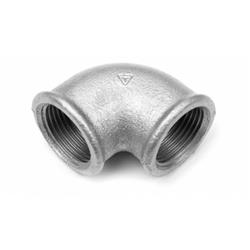
Threaded fittings
Components such as nipples, sockets, elbows, tees, reducers, unions, plugs and caps for assembling and adapting threaded pipework.
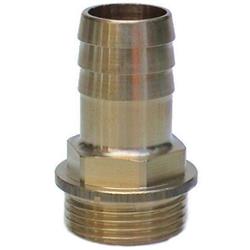
Hose tails
Barbed or profiled connectors for joining compatible flexible hoses to pipework, valves or equipment using a suitable retention method.
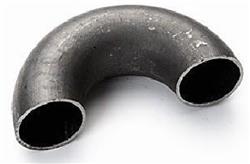
Weld fittings
Weldable pipe components for permanent joints, transitions, branches and changes of direction in compatible metal pipework.
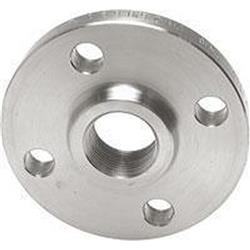
Flanges
Threaded, welding and blank flanges, together with compatible gaskets and sealing products, for removable pipe and equipment connections.
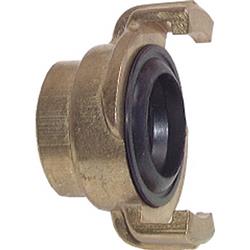
Geka couplings
Symmetrical claw couplings for quickly connecting compatible hoses in water, compressed-air and general industrial applications.
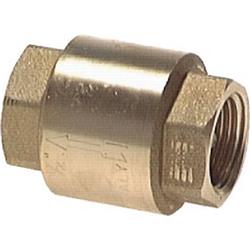
Check valves
Valves that allow flow in the intended direction and help prevent reverse flow when operating conditions meet the valve specification.
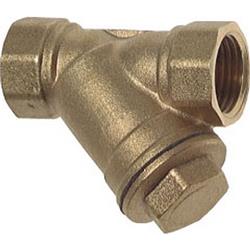
Filters
Components for removing selected contaminants from liquid or air streams and helping protect downstream equipment.
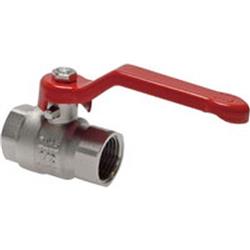
Ball and shut-off valves
Manually operated components for opening, closing or isolating sections of a pipework system.
Sealing products
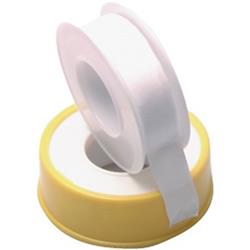
Seals, gaskets and thread-sealing products selected for the connection type, fluid, pressure, temperature and material combination.
Typical applications
- Machine building
- Water installations
- Compressed-air lines
- Industrial pipework
- Agriculture and irrigation
- Tank and storage installations
- Cooling and circulation systems
- Workshops and production facilities
- Marine applications
- Maintenance and repair
Important: “low pressure” is a relative category description, not a common pressure rating. Permissible working pressure varies by product, size, material, temperature, fluid and manufacturer. The rating of an assembly is limited by its lowest-rated component.
Functions within a pipework system
Connecting and adapting
Threaded fittings, hose tails, weld fittings and flanges connect lines or provide transitions between different sizes and connection methods.
Isolating and controlling flow
Ball valves and other shut-off valves allow a section of pipework to be opened, closed or isolated for operation or maintenance.
Filtering and sealing
Filters capture specified contaminants, while gaskets and sealing products help prevent leakage at correctly assembled connections.
Which component suits your application?
| Component | Main function | Important selection criteria |
|---|---|---|
| Threaded fitting | Connect, reduce, branch or redirect pipework | Thread standard, size, form, material, sealing method, fluid and working pressure |
| Hose tail | Connect flexible hose to pipework or equipment | Hose bore and construction, tail profile, connection, retention method, fluid and pressure |
| Weld fitting | Create a permanent metal pipe connection | Pipe dimensions, wall thickness, material, welding procedure and applicable standard |
| Flange | Create a removable pipe or equipment connection | Standard, nominal size, pressure designation, flange type, facing, gasket and bolting |
| Geka coupling | Quickly connect and disconnect compatible hoses | Claw spacing, hose size, connection, seal, fluid, pressure and application |
| Check valve | Help prevent reverse flow | Connection, cracking pressure, flow direction, fluid, capacity and mounting requirements |
| Filter | Remove selected contamination from the fluid | Connection size, filtration rating, flow capacity, pressure drop, fluid and maintenance method |
| Ball or shut-off valve | Open, close or isolate a section of pipework | Bore, connection, material, operation and pressure-temperature limits |
Threaded fittings for pipework
Threaded fittings offer a versatile way to extend, branch, reduce or redirect low-pressure pipework. The range includes nipples, sockets, elbows, tees, crosses, reducing bushes, unions, plugs and caps.
Do not identify a thread by nominal size alone. Verify the thread standard, pitch, taper or parallel form, male or female connection and sealing principle. Some threads seal on the thread, while others require a bonded seal, O-ring, gasket or separate sealing face. Components that appear to screw together are not necessarily compatible.
Hose tails and hose connections
A hose tail is inserted into a compatible flexible hose and secured using the retention method specified for the hose and application. This may be a suitable hose clip, crimp sleeve or another approved assembly method. The tail profile and outside diameter must suit the hose bore and construction.
- Confirm the exact hose bore and construction
- Select a compatible hose-tail profile
- Use an approved retention method
- Check fluid and temperature compatibility
- Avoid sharp bends and tensile loading at the connection
- Verify the working pressure of the complete assembly
- Inspect the connection at suitable intervals
- Follow the hose and fitting assembly instructions
Flanges and weld fittings
Flanges are used where a connection must remain removable or where equipment is connected through a standardised flange interface. Match the flange standard, nominal size, pressure designation, facing, gasket and bolt pattern. Do not assume that flanges with a similar outside diameter are interchangeable.
Weld fittings create permanent connections in compatible metal pipework. Material identification, preparation, fit-up, welding procedure and inspection are essential to joint integrity. Welding must be carried out by competent personnel in accordance with the requirements applicable to the installation.
Check valves, filters and shut-off valves
A check valve allows flow in one direction after its opening or cracking pressure has been reached and helps limit reverse flow. Performance depends on orientation, differential pressure, fluid properties and the valve design. A check valve is not automatically a safety or pressure-relief valve.
Filters retain contamination within their specified filtration range and operating capacity. Correct sizing must consider flow, permitted pressure drop and maintenance access. Ball valves and other shut-off valves isolate sections of pipework for operation, service or replacement; they must not be used for throttling unless the selected valve is designed for that duty.
Materials for low-pressure components
Carbon and plated steel
Widely used for mechanical strength. A suitable surface treatment can help reduce atmospheric corrosion during storage and service.
Stainless steel
An option for wet or corrosive environments, provided the selected grade, seals and product design are compatible with the fluid and conditions.
Brass, cast iron and polymers
Used in various water, compressed-air and industrial applications. Always verify pressure, temperature, mechanical and chemical compatibility.
A material name alone does not establish suitability. Also consider the exact grade, manufacturing method, surface finish, seal material, galvanic compatibility and environmental exposure.
How to select low-pressure components
- Identify the fluid and any contamination or chemical exposure.
- Establish normal pressure, maximum pressure, vacuum conditions and possible transients.
- Check operating and ambient temperatures.
- Determine the pipe, hose or nominal connection size.
- Verify the thread standard, flange standard or connection method.
- Select materials and seals compatible with the fluid and environment.
- Decide whether the connection must be removable or permanent.
- Check the required bore, flow capacity and permissible pressure drop.
- Verify the rating of every component in the complete assembly.
- Allow sufficient access for installation, inspection and maintenance.
Sealing threaded and flanged connections
The correct seal depends on the connection design. Tapered threads, parallel threads with a sealing face, flanges and O-ring connections use different sealing principles. Select the seal or gasket for the fluid, pressure, temperature, surface finish and chemical exposure.
Do not automatically add thread sealant to a connection designed to seal with an O-ring, bonded seal, gasket or metal sealing face. Excess sealant can prevent correct seating, contaminate the system or damage components. Follow the product-specific assembly instructions.
Safe installation and common errors
- Do not use a component above its specified pressure-temperature limits.
- Do not combine thread forms or sealing principles that are not compatible.
- Avoid cross-threading, excessive tightening and damaged sealing faces.
- Use only suitable gaskets, seals and thread-sealing products.
- Support pipework so that connections do not carry unintended mechanical loads.
- Check the flow direction and installation orientation of check valves and filters.
- Align flange faces without forcing the pipework and tighten bolts in the specified sequence.
- Use only hose, tail and retention combinations approved for the application.
- Depressurise and secure the system before work and test the completed installation in a controlled manner.
Inspection and maintenance
- Inspect connections for leakage
- Check components for corrosion or damage
- Inspect hoses and hose-tail connections
- Clean or replace filter elements as required
- Check valves for correct and free operation
- Replace damaged or compressed gaskets
Maintenance intervals depend on the fluid, duty cycle, contamination level, temperature, vibration and environment. Inspect the system after modifications, prolonged shutdown, abnormal operation or any visible leakage. Never search for a pressurised leak with bare hands.
Frequently asked questions about low-pressure components
What are low-pressure components?
They are connection, isolation, filtration and sealing components used in systems categorised below high-pressure hydraulic applications. “Low pressure” does not define one universal limit; the permitted working pressure is product-specific.
Which materials are used for low-pressure fittings?
Common materials include carbon steel, plated steel, stainless steel, brass, cast iron and polymers. The correct choice depends on the fluid, pressure, temperature, mechanical loads and environment.
How do I select the correct threaded fitting?
Verify the thread standard, size, pitch, taper or parallel form, male or female connection, fitting shape, material, sealing method, fluid, temperature and maximum working pressure.
What is a check valve used for?
A check valve allows flow in the intended direction when its opening conditions are met and helps prevent reverse flow. It does not normally replace a pressure-relief or safety valve.
What is the difference between a threaded flange and a weld-neck flange?
A threaded flange connects through a compatible pipe thread. A weld-neck flange is butt-welded to the pipe, creating a permanent transition to a removable bolted flange connection. The applicable standard and installation requirements must match the system.
Which seal do I need?
The correct seal depends on the connection design, thread or flange type, fluid, pressure, temperature and chemical compatibility. Use the seal specified for the selected components rather than choosing by appearance alone.
Can all components in this category be used for compressed air?
No. Each fitting, valve, hose, seal and coupling must be specifically suitable for the pressure, temperature and stored-energy risks of the compressed-air system. Check every product's technical data.
Order low-pressure components from Leeuwtechniek
Leeuwtechniek supplies threaded fittings, hose tails, weld fittings, flanges, Geka couplings, check valves, filters, ball valves, other shut-off valves and sealing products for a wide range of pipework systems.
Always consult the product-specific technical data. If you are unsure about the material, connection, dimensions, pressure rating, fluid compatibility or sealing method, Leeuwtechniek can help you compare suitable components.
Need help selecting low-pressure components?
Our specialists can help you compare fittings, flanges, valves, filters and sealing products for your pipework system.
Call +31 38 421 80 23
Reliable components for low-pressure pipework.
Explore threaded fittings, hose tails, weld fittings, flanges, Geka couplings, check valves, filters, shut-off valves and sealing products for water, compressed-air and general industrial pipework.