


We only use functional cookies for the operation of the webshop. For optimal functioning, please click on accept.
Cleaning technology
Cleaning technology for professional applications
Hoses, couplings, spray guns, lances, nozzles and accessories for safe, powerful and controlled professional cleaning.
Professional components for cleaning systems
Professional cleaning installations place high demands on hoses, couplings, spray equipment and pressure-bearing components. Each part must be suitable for the working pressure, temperature, cleaning medium and intensity of use.
Leeuwtechniek supplies a wide range of cleaning technology for building, modifying and maintaining professional cleaning systems. The range includes cleaning hoses and hose fittings, spray guns, adapters, spray lances, cleaning nozzles, quick connectors, hose reels and accumulators.
A reliable cleaning system depends on the correct interaction between pump, hose, couplings, gun, lance and nozzle. Pressure alone does not determine cleaning performance; water flow, nozzle size and spray pattern are equally important.
Safe operation under pressure
Correctly selected hoses, couplings and control components provide a reliable connection between the pump, hose system and spray equipment.
Controlled cleaning performance
The correct lance and nozzle help match pressure, flow rate, working distance and spray pattern to the surface and type of contamination.
Cleaning technology at Leeuwtechniek
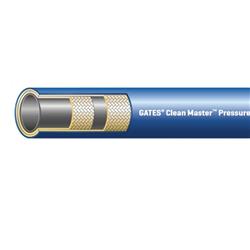
Cleaning hoses and hose fittings
Pressure-resistant hoses and matching hose fittings for transporting water and suitable cleaning fluids safely through professional cleaning systems.
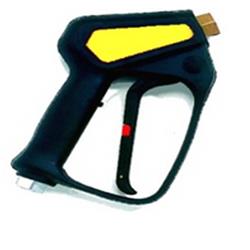
Cleaning pistols
Hand-operated spray guns for safely opening, closing and controlling the water flow to the lance and nozzle.
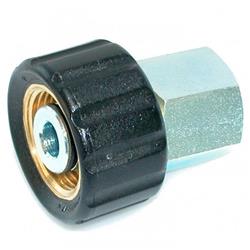
Adapters
Reducers and connection pieces for joining different thread types, dimensions and connection styles within cleaning installations.
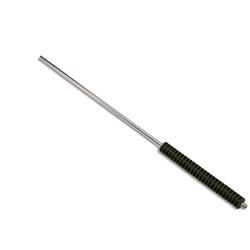
Spray lances
Straight, angled and extended lances for positioning the nozzle safely and accurately, including in difficult-to-reach areas.
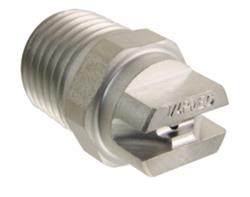
Cleaning nozzles
Nozzles convert pressure and water flow into a defined spray pattern, angle and cleaning effect suited to the application.
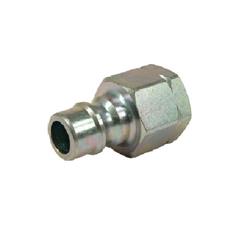
Quick connectors
Quick-release couplings for connecting and disconnecting hoses, spray guns, lances and other cleaning components efficiently.
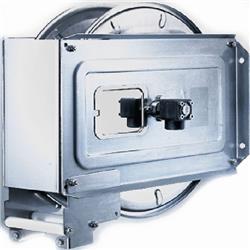
Hose reels
Manual or automatic hose reels for organised storage, quick deployment and improved protection of cleaning hoses.
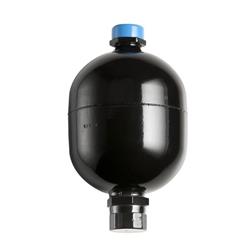
Accumulators
Pressure accumulators that can be used in suitable systems to reduce pressure pulsations and support more stable system behaviour.
Where is professional cleaning technology used?
Cleaning components are used wherever water or a suitable cleaning medium must be delivered under controlled pressure to remove dirt, deposits or contamination.
- Industrial cleaning
- Vehicle and machine maintenance
- Agriculture and livestock farming
- Food processing environments
- Workshops and wash bays
- Shipbuilding and offshore
- Building and surface cleaning
- Tank and pipe cleaning
- Drain and sewer maintenance
- Mobile cleaning installations
The correct configuration depends on the type of contamination, required cleaning force, surface, accessibility, pump pressure, water flow and temperature.
How is a professional cleaning system built?
1. Generate and transport pressure
The pump supplies pressure and flow. Hoses, adapters and couplings transport the water from the pump to the operating side of the system.
2. Control and position
The spray gun controls the water flow, while the lance provides a practical working distance and positions the nozzle.
3. Shape the spray
The nozzle determines the spray angle, jet shape and how the available pressure and flow are applied to the surface.
Which cleaning component is suitable for your application?
| Component | Main function | Important selection criteria |
|---|---|---|
| Cleaning hose | Transport water or suitable cleaning fluid under pressure | Working pressure, temperature, diameter, length, bend radius and hose cover |
| Hose fitting | Connect the hose safely to the machine, reel or gun | Hose size, fitting type, material, assembly method and pressure rating |
| Adapter | Connect different threads and connection types | Thread type, size, sealing method, material and working pressure |
| Spray lance | Position the nozzle and create working distance | Length, shape, connection, pressure, temperature and ergonomics |
| Cleaning nozzle | Convert water flow into the required spray pattern | Nozzle size, spray angle, flow, pressure, material and application |
| Quick connector | Connect and disconnect components quickly | Working pressure, flow capacity, locking system, material and temperature |
| Hose reel | Store and deploy the hose safely | Hose length, diameter, pressure, rewind method and mounting position |
| Cleaning pistol | Manually open and close the water flow | Pressure, flow rate, temperature, connection and operating force |
How do you select the right cleaning components?
Professional cleaning equipment should be selected as a complete system. Every component must be suitable for the maximum conditions of the installation.
- Determine the maximum pump pressure
- Check the available water flow
- Determine the maximum water temperature
- Select hose and fittings with a suitable pressure rating
- Match hose diameter to length and required flow
- Select the correct nozzle size and spray angle
- Check all thread types and sealing methods
- Choose a suitable lance length and working distance
- Consider ergonomics and trigger force
- Select materials suitable for the cleaning medium and environment
Cleaning hoses and hose fittings
A cleaning hose must be suitable for the maximum working pressure and temperature of the installation. Flexibility, bend radius, abrasion resistance and compatibility of the inner tube with water or cleaning media also play an important role.
The hose diameter should allow sufficient flow without causing unnecessary pressure loss. This becomes increasingly important with longer hose runs and higher flow rates.
Hose fittings must be suitable for the exact hose construction and installed according to the correct assembly or crimp specification. A fitting that appears to have the correct size is not automatically suitable for a particular hose.
- Check maximum working pressure
- Consider water temperature
- Select the correct hose diameter
- Respect the minimum bend radius
- Use compatible hose fittings
- Inspect the hose cover regularly
Cleaning pistols and spray lances
The spray gun is the main manual control point of many professional cleaning systems. It must be suitable for the maximum working pressure, temperature and water flow of the installation.
Ergonomics are particularly important during prolonged use. Trigger force, grip and overall weight influence operator comfort and fatigue.
The spray lance creates distance between the operator and the water jet and allows the nozzle to be positioned accurately. Straight lances are suitable for many general applications, while angled and extended versions can improve access to difficult areas.
Cleaning nozzles and spray patterns
The nozzle is one of the most important components for cleaning performance. Its opening must match the pump pressure and available water flow. An incorrectly sized nozzle can reduce cleaning performance or cause the system to operate outside its intended conditions.
Narrow jet
Concentrates the available cleaning force on a smaller area. This can be effective against stubborn contamination but requires care on sensitive surfaces.
Wide fan spray
Distributes the water over a larger area and is suitable for general cleaning and larger surfaces.
Rotating jet
Combines a concentrated jet with rotational movement for intensive cleaning of suitable surfaces.
Always select the nozzle according to pump data, required flow, desired spray angle and application. Do not assume that a smaller nozzle automatically provides better cleaning.
Pressure, flow and cleaning performance
Cleaning performance is determined by more than pressure alone. Water flow also plays a major role because it helps remove loosened contamination from the surface.
A very high pressure combined with insufficient flow may be less effective than a well-balanced combination of pressure, water volume and nozzle size. The optimum balance depends on the contamination and the surface being cleaned.
Also consider pressure losses in hoses, fittings, couplings and valves. The pressure available at the nozzle may be lower than the pressure measured directly at the pump.
Hot-water cleaning and temperature
Hot water can improve cleaning performance in applications involving oils, grease and certain types of contamination. However, every pressure-bearing component must be suitable for the maximum operating temperature.
Hoses, seals, couplings, spray guns, lances and reels may have different temperature limits. In some components, the permitted working pressure can also decrease at elevated temperatures.
Always check the technical specifications for both pressure and temperature before using components in hot-water cleaning systems.
Quick connectors and adapters
Quick connectors make it possible to change hoses, spray guns, lances and other accessories without repeatedly dismantling threaded connections. This can make professional cleaning equipment faster and more flexible to use.
The quick connector must be suitable for the working pressure, temperature, flow capacity and cleaning medium. Make sure the coupling is fully locked before the system is pressurised.
Adapters are used to connect different threads or connection types. Always check the thread standard as well as the sealing principle. Two connections with similar dimensions do not necessarily form a safe or leak-tight connection.
Hose reels for safe and efficient cleaning
A hose reel keeps the workplace organised and makes it easier to deploy and store long cleaning hoses. Correct storage can also help reduce unnecessary dragging, kinking and damage.
Select a hose reel according to hose length, hose diameter, maximum working pressure, temperature, rewind method and mounting position. The swivel through which the fluid passes must also be suitable for the pressure and medium.
Make sure the hose is wound evenly and does not become trapped or twisted during use.
Accumulators and pressure pulsations
In some cleaning installations, an accumulator can be used to reduce pressure fluctuations or pulsations. This can support more stable system behaviour and reduce repeated loading on pipes, hoses and other components.
An accumulator is a pressure component and must be selected, installed and maintained correctly. Important factors include system pressure, volume, medium, temperature and pre-charge pressure.
Always follow the applicable technical and safety requirements when working with accumulators.
Common mistakes in professional cleaning systems
- Selecting components only on the basis of thread size
- Using a hose with an insufficient pressure or temperature rating
- Using a nozzle that does not match pump pressure and flow
- Ignoring pressure loss in long or undersized hoses
- Using incompatible sealing methods on threaded connections
- Failing to lock quick connectors completely
- Allowing hoses to kink or rub against sharp surfaces
- Using components above their permitted temperature
- Continuing to use damaged hoses or fittings
- Ignoring abnormal pressure fluctuations or system behaviour
Work safely with high-pressure cleaning equipment
High-pressure water jets can cause serious injury and may also damage surfaces or equipment. Never direct a high-pressure jet at people or animals.
- Use only components suitable for the maximum working pressure
- Depressurise the system before disconnecting components
- Inspect hoses and couplings before use
- Use suitable personal protective equipment
- Avoid sharp bends and damage to pressure hoses
- Make sure quick connectors are fully locked
- Use appropriate spray distance and nozzle selection
- Follow the instructions supplied with the machine and components
Inspection and maintenance
Regular inspection is important because hoses, couplings and moving components are subject to pressure cycles, wear and mechanical loads.
- Inspect hoses for abrasion and damage
- Check hose fittings and threaded connections
- Inspect the spray gun and trigger mechanism
- Check nozzles for wear or blockage
- Inspect hose reels and swivels
- Check quick connectors for correct locking
- Look for leakage or deformation
- Replace damaged components in time
Stop using the installation if leakage, visible damage, deformation or abnormal pressure behaviour occurs. Temporary repairs to pressure hoses or fittings should not be treated as a substitute for a correctly selected replacement component.
Frequently asked questions about cleaning technology
Which hose do I need for a pressure washer?
Select the hose according to maximum working pressure, temperature, medium, inside diameter, length, minimum bend radius, hose cover and compatibility with the machine and hose fittings.
How do I select the correct cleaning nozzle?
Match the nozzle to pump pressure, available water flow, required spray pattern, spray angle and application. Use the technical nozzle data for the final selection.
Can every quick connector be used for high-pressure cleaning?
No. The connector must be suitable for the maximum working pressure, temperature, flow capacity, connection type and cleaning medium.
What is the advantage of a hose reel?
A hose reel keeps the hose organised and can reduce unnecessary dragging, kinking and wear while making the cleaning installation easier to deploy.
Why is my cleaning system not reaching the expected pressure?
Possible causes include an incorrect or worn nozzle, insufficient water supply, leakage, restricted filters, excessive pressure loss in the hose or a problem with the pump or regulating components.
Can Leeuwtechniek help select cleaning components?
Yes. Information about pump pressure, water flow, temperature, hose diameter, connections and application helps determine suitable hoses, couplings, nozzles, lances and other components.
Order professional cleaning components from Leeuwtechniek
Leeuwtechniek supplies cleaning hoses, hose fittings, adapters, spray lances, cleaning nozzles, quick connectors, hose reels, accumulators and cleaning pistols for professional and industrial cleaning installations.
For reliable operation, always select components according to the requirements of the complete system. Pressure, flow, temperature, hose diameter, connection type, nozzle size and cleaning medium should all be considered.
If you are unsure which hose, coupling, nozzle, spray lance, spray gun or reel is suitable for your application, Leeuwtechniek can assist with product selection.
The right cleaning technology for your application
Explore the Leeuwtechniek cleaning technology range or contact us for technical advice on hoses, couplings, nozzles, spray lances, cleaning pistols and hose reels.
Professional components for powerful and reliable cleaning systems.
From cleaning hoses and spray guns to nozzles, spray lances, reels and quick connectors. For professional and industrial cleaning installations where pressure, flow and durability matter.