
Hydraulic tube fittings 24° DIN2353

Reliable tube fittings for hydraulic piping systems.

Explore cutting-ring fittings, reducers, elbow and tee fittings, weld fittings and assembly accessories for precise, robust hydraulic tube connections that can be disassembled for maintenance.

24° cutting-ring fittings for hydraulic tube systems

Reliable, serviceable tube connections for hydraulic installations, machinery and industrial applications.

24° cutting-ring fittings are used to connect metric hydraulic tubes to one another or to ports and other components. During assembly, the union nut drives the cutting ring into the 24° cone of the fitting body. The cutting edge or edges bite into the outside of the tube to provide mechanical retention and support the sealing function.

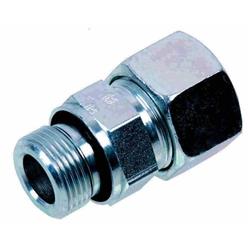
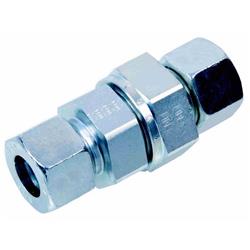
Leeuwtechniek supplies tube fittings for different tube sizes, series and applications. The range includes male and female stud couplings, straight connectors and reducers, elbows, tees, crosses, non-return valves, welding couplings, 24° flare connections, plugs, seals, cutting rings, union nuts and assembly components.

Reliable tube connection

When correctly selected and assembled, the cutting ring, tube and 24° cone form a strong, pressure-resistant connection that can be disconnected for servicing.

Wide range of configurations

24° tube fittings are used in fixed pipework, machinery, mobile hydraulic systems and industrial installations.

Where are 24° cutting-ring fittings used?

  • Hydraulic machinery
  • Mobile hydraulic systems
  • Machinery and equipment manufacturing
  • Agricultural machinery
  • Earthmoving equipment
  • Industrial systems
  • Transport equipment and vehicle manufacturing
  • Shipbuilding and marine applications
  • Measurement and control systems
  • Workshop equipment and test installations

These fittings are particularly suitable for systems using rigid hydraulic tube. Their compact design provides a mechanically secure connection that can usually be disassembled and reassembled when the product instructions allow it.

Tube fitting configurations in the range

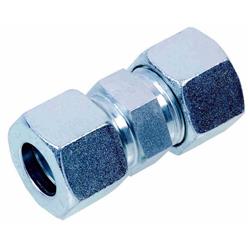
Straight connectors and reducers

Connect tubes in a straight line, either with the same outside diameter or with different tube sizes.

Male stud couplings

Connect hydraulic tube to a female threaded port using the specified thread and sealing method.

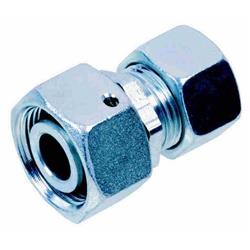
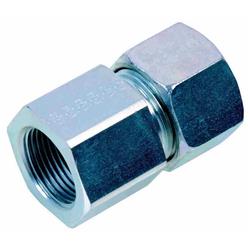
Female stud couplings

Provide a transition from hydraulic tube to a compatible male threaded connection.

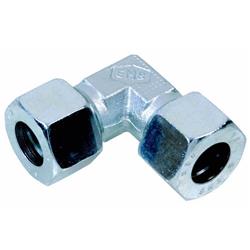
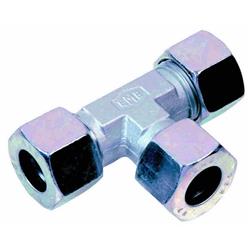
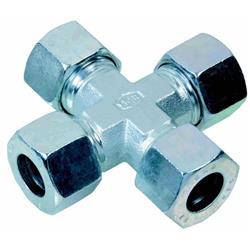
Elbows, tees and crosses

Change, branch or combine flow paths to create compact hydraulic tube layouts.

Non-return valves and control components

Add directional or control functions within a compatible 24° tube fitting system.

Welding couplings

Provide a transition between the 24° fitting system and a correctly prepared welded tube connection.

24° flare connections

Connect a prepared flared tube end to a compatible 24° DIN fitting without using a conventional cutting ring.

Plugs and blanking plugs

Close unused ports or fitting ends using the correct sealing design for the connection.

Cutting rings, nuts and seals

Complete the tube connection and must match the fitting series, tube size, material and product design.

How a cutting-ring connection works

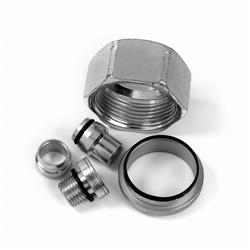
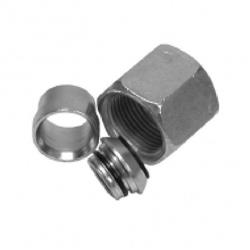
A conventional 24° cutting-ring connection consists of a fitting body with a 24° cone, a cutting ring, a union nut and a suitable tube. As the nut is tightened, it drives the ring into the cone. Depending on the ring design, one or more cutting edges progressively bite into the tube surface while the ring also supports and grips the tube.

The sealing and retention functions depend on correct tube preparation, compatible components and the specified assembly procedure. Too little assembly can result in insufficient bite or leakage; excessive assembly can damage the ring, tube or fitting.

Not every product in the wider 24° DIN range uses a conventional cutting ring. O-ring seal cones, formed tube systems, welding couplings and flare connections use different sealing and retention principles. Always follow the instructions for the selected product.

L series and S series

Series General characteristic Typical use
L series Light series with compact fitting dimensions; pressure rating depends on the product and size General hydraulic systems, machinery and industrial installations
S series Heavy series with more robust fitting dimensions and generally higher product-specific pressure ratings Heavy-duty hydraulic systems, mobile equipment and demanding machinery

The L and S series differ in fitting dimensions, threads, tube-size combinations and pressure ratings. Parts must not be interchanged based on appearance or tube outside diameter alone. Always verify the complete product designation.

Materials and surface protection

Carbon steel

Widely used for hydraulic tube fittings because of its mechanical strength. The permissible pressure and temperature depend on the specific fitting, size, coating and application.

Stainless steel

Used where improved corrosion resistance or compatibility with demanding environments and fluids is required. Use cutting rings and assembly procedures intended for stainless-steel tube and fittings.

Standards and dimensions

DIN 2353 is a widely recognised product designation for metric 24° tube fittings. ISO 8434-1 specifies general and dimensional requirements for 24° cone connectors using cutting rings and O-ring seal cones. A reference to one of these standards does not remove the need to verify the manufacturer's product data.

  • DIN 2353 fitting configurations
  • ISO 8434-1 24° cone connectors
  • Metric tube outside diameters
  • L and S series
  • Product-specific tube requirements
  • Product-specific pressure ratings

Tube outside diameter alone is not sufficient for selection. Wall thickness, tube material, hardness, dimensional tolerances, fitting series and pressure rating must also be compatible.

Preparing the hydraulic tube

Reliable assembly starts with tube that meets the fitting manufacturer's material, dimensional and tolerance requirements. Cut the tube squarely using an approved method, then remove internal and external burrs without damaging the sealing area. The tube must be round, clean and free from scratches, dents and contamination.

Many cutting-ring assembly instructions prohibit wheel-type pipe cutters because they can deform the tube end and create an internal burr. Maintain the specified straight tube length before a bend and avoid installing the fitting under mechanical tension.

Thin-wall or soft tube may require a support sleeve. Check the manufacturer's tube and support-sleeve table before assembly.

Pre-assembly and final assembly

Many cutting-ring systems require a controlled pre-assembly operation. Depending on the fitting, tube material and size, this may be performed in the fitting body, with a hardened pre-assembly tool or with an approved assembly machine.

After pre-assembly, inspect the cutting-ring bite exactly as described by the manufacturer. The tube must have remained fully against the internal stop during assembly, and the required material collar or other inspection feature must be present. Complete the final assembly using the specified number of turns, flats or torque value for that product.

Disassembly and reassembly

Many correctly assembled cutting-ring connections can be disconnected and reassembled. The cutting ring normally remains fixed to the tube. Before reassembly, inspect the tube, cutting ring, nut, threads and sealing surfaces for damage, deformation, contamination or corrosion.

Only reuse the connection when the manufacturer's instructions permit it and all components pass inspection. Follow the specified reassembly procedure; do not simply continue tightening in an attempt to correct a damaged or incorrectly assembled connection.

Inspection and maintenance

  • Check connections for leakage
  • Inspect for corrosion and contamination
  • Look for damaged threads or fitting bodies
  • Check for vibration and external loads
  • Inspect tube supports and clamps
  • Replace damaged components promptly

If leakage is detected, depressurise the system and determine the cause before taking corrective action. Repeated tightening without inspection can further damage the tube, cutting ring or fitting.

Frequently asked questions about 24° cutting-ring fittings

What is a 24° cutting-ring fitting?

It is a serviceable metal tube connection in which a union nut drives a cutting ring into a 24° cone. The ring bites into the outside of the tube to provide mechanical retention and support the sealing function.

What is the difference between the L and S series?

L is the light series and S is the heavy series. They differ in fitting dimensions, threads, available tube sizes and product-specific pressure ratings. Components are not automatically interchangeable.

Can a cutting-ring fitting be reassembled?

Often yes, provided that the product instructions permit reassembly and the tube, ring, nut, threads and sealing surfaces are undamaged. Always use the specified reassembly procedure.

Which tube should I use?

Use tube with the outside diameter, wall thickness, material, hardness and tolerances specified for the selected fitting. A support sleeve may be required for thin-wall or soft tube.

Why is a cutting-ring connection leaking?

Possible causes include incorrect tube preparation, insufficient or excessive assembly, incompatible components, contamination, external loading or damage to the tube or fitting.

Should thread sealant be applied?

Do not apply thread sealant to the cutting-ring and 24° cone connection. At the port end, use sealant only when the connection is designed to seal on the thread and the manufacturer specifies an approved product.

Are DIN 2353 and ISO 8434-1 components always interchangeable?

No blanket assumption should be made. Verify the manufacturer, fitting design, series, tube size, thread, sealing method, material and pressure rating before combining components.

Order 24° tube fittings from Leeuwtechniek

Leeuwtechniek supplies male and female stud couplings, straight connectors, reducers, elbows, tees, crosses, non-return valves, welding couplings, 24° flare connections, plugs, seals, cutting rings, union nuts and assembly components for hydraulic tube systems.

Always consult the current technical product data and assembly instructions. If you are unsure about the tube size, fitting series, material, port thread or assembly method, Leeuwtechniek can help you select a suitable connection.